Predict
Models and scoring with weak experimental closure.
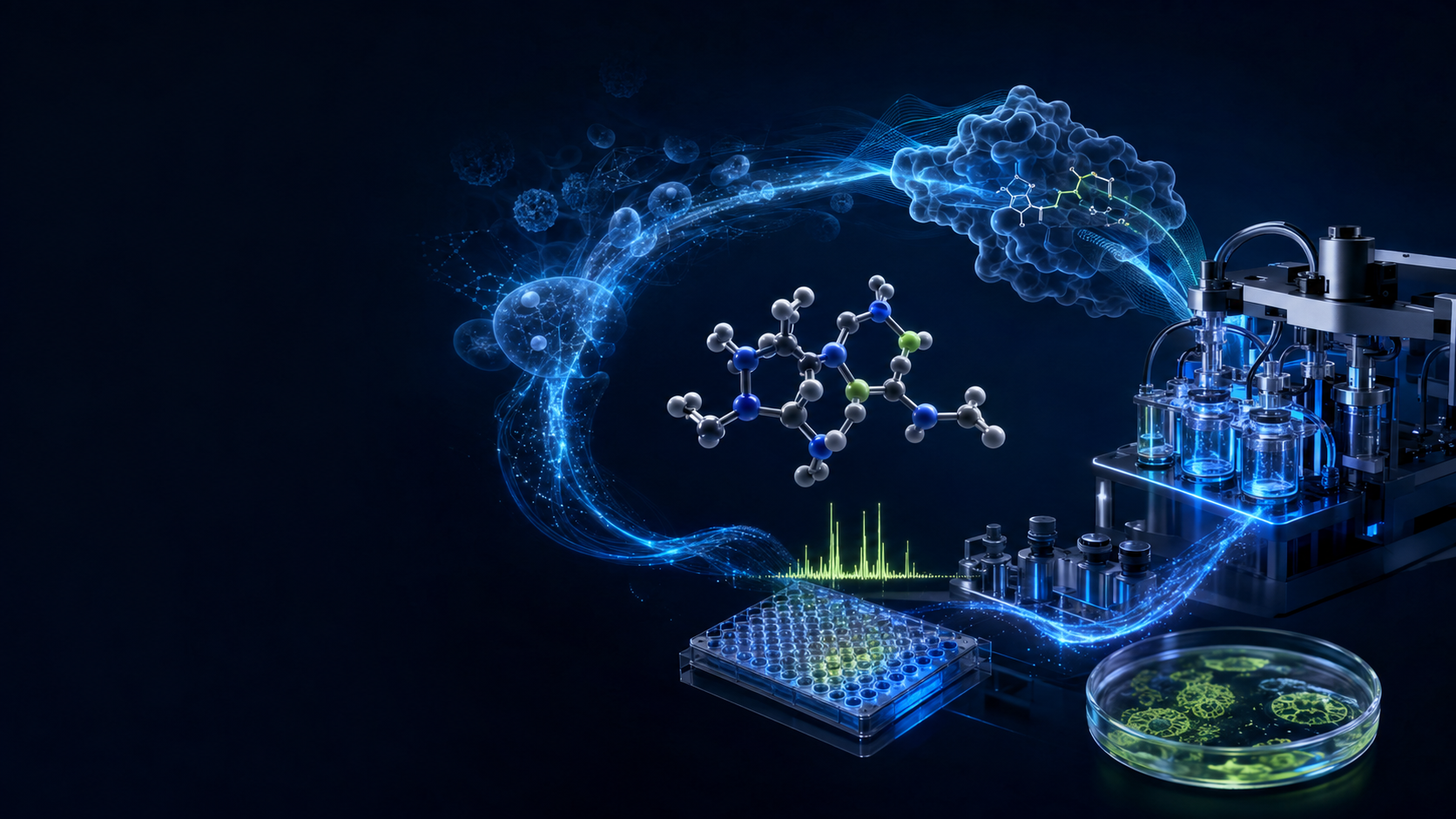
Limited reusable learningFrom fragmented R&D to a closed learning loop: evidence → design → integrated robotic synthesis → assay → learning.
AI, chemistry and biology still run in weak feedback loops. Context is lost between target reasoning, design, assays, failures and decisions.
The value leak is the repeated loss of scientific learning.
ADAPT works holistically: each model contributes to a shared decision, and every result returns to the same scientific memory.
Models and scoring with weak experimental closure.
Limited reusable learningOperational capacity detached from decision context.
Learning remains project-specificEvidence, computation, synthesis, assays and feedback in one system.
Compounding scientific memoryThe platform can address different targets and therapeutic areas while advancing a real internal and co-development pipeline.
New therapeutic strategies
for aggressive brain tumours
Discovery programme for
molecularly diverse disease
Therapeutic programme for
metabolic liver disease
First discovery programme
focused on bacterial infection
Second programme expanding
the antibacterial pipeline
Target-driven programme for
ADAR-mediated RNA editing
Public communication intentionally withholds targets, indications and chemical structures.

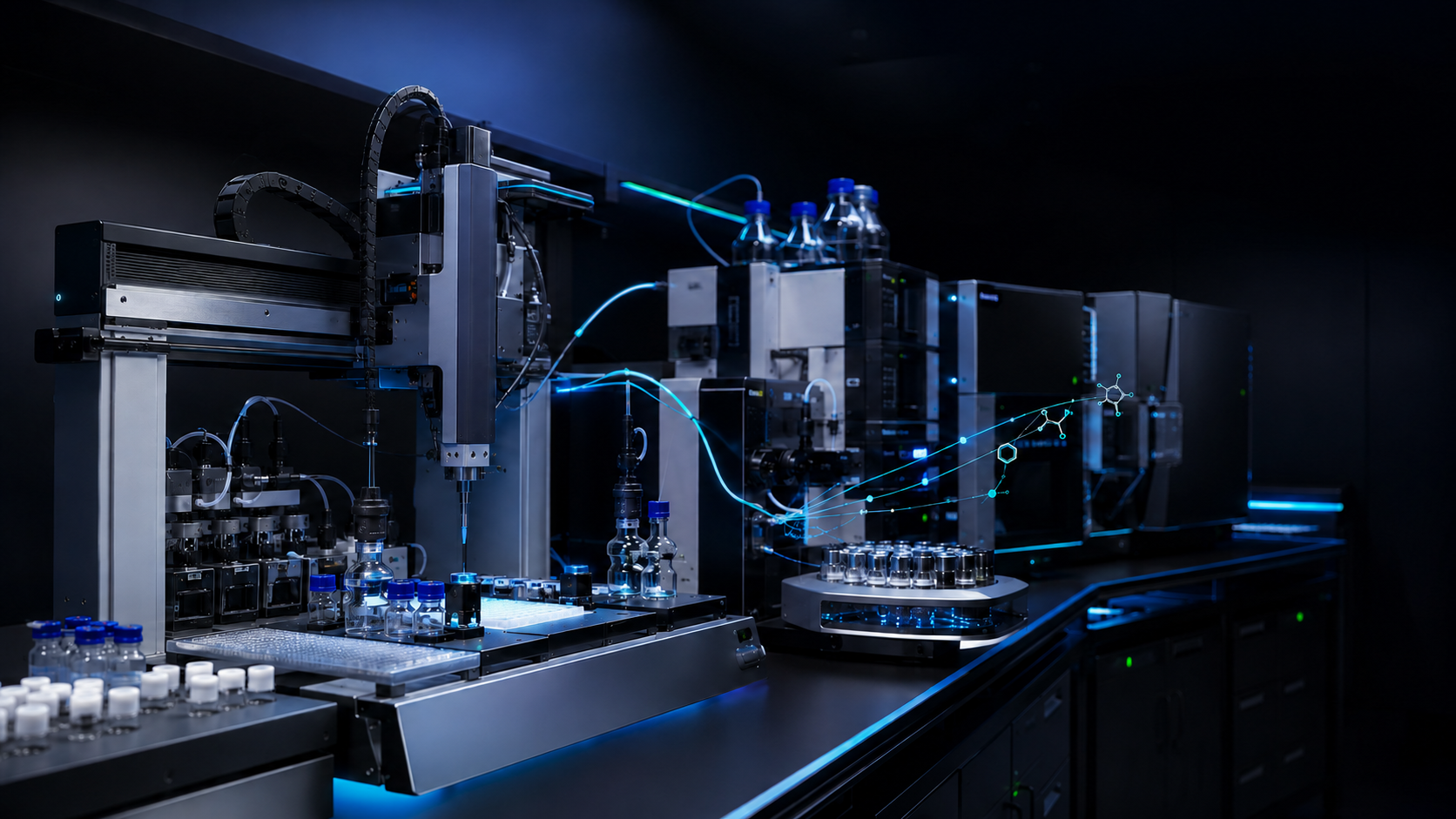
Automation configured around programme chemistry and handling.
Parallel synthesis, washing, separation and multi-step handling.
ADAPT chooses high-information syntheses and tests.

Target intelligence, screening, toxicity and developability.
Entry revenue + customer proofConfigured workflows, modules and enterprise access.
Recurring platform economicsMilestones, licensing, shared IP and proprietary programmes.
Portfolio-level upside


Management plan from the 2026 investor deck. Revenue: $0.5M · $2.2M · $17.5M · $78.0M. Costs: $0.3M · $1.0M · $3.8M · $12.0M.