Target and mechanism intelligence
Rank targets using disease context, pathway evidence, mechanistic plausibility and validation strength.
For pharma & biotech
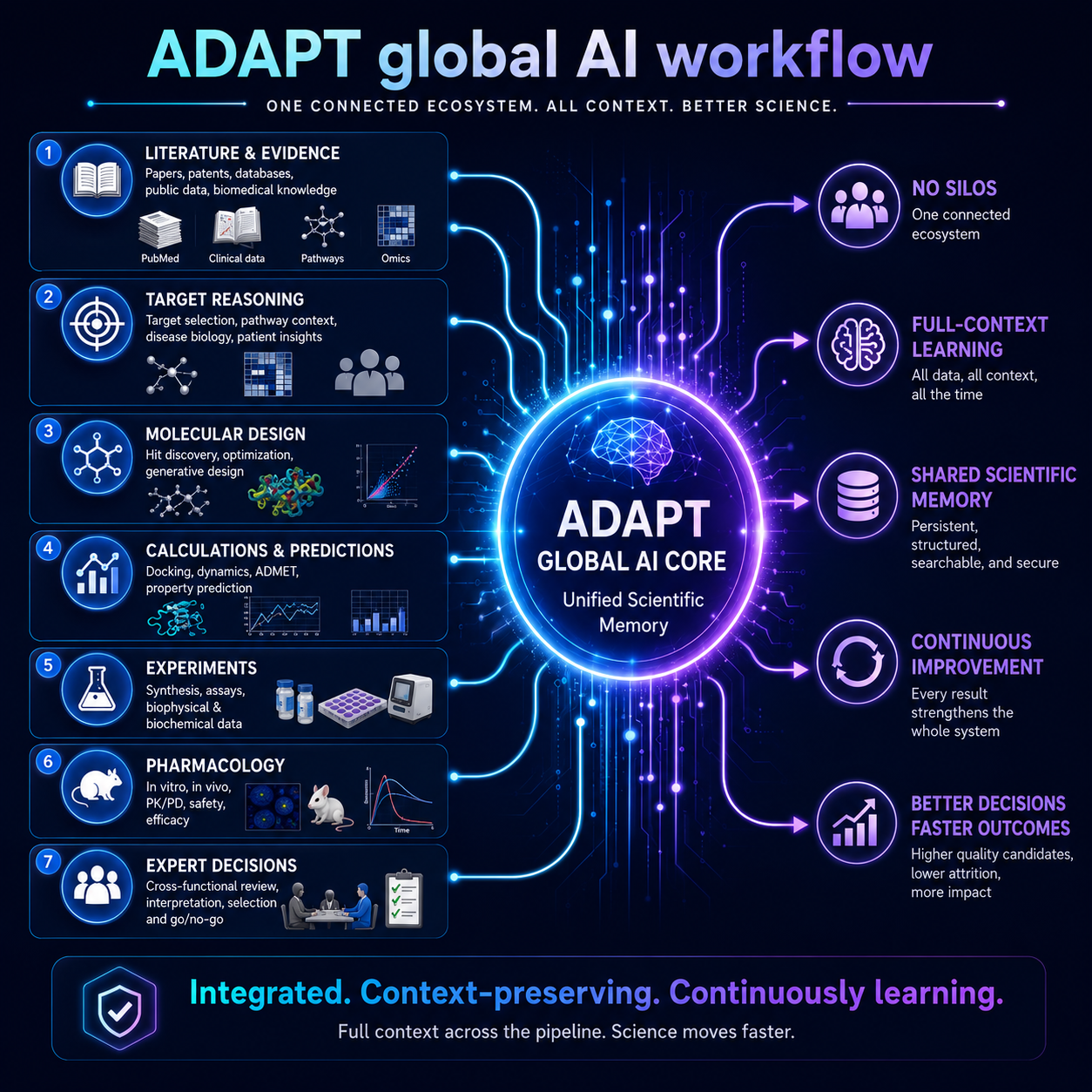
ADAPT connects evidence, target reasoning, molecular evaluation, synthesis and assays—preserving the full scientific rationale throughout the programme.
Where SoftMining enters
A collaboration can start from a target, disease area, candidate set, stalled asset or fragmented internal knowledge. The first objective is always a decision—not technology deployment for its own sake.
Rank targets using disease context, pathway evidence, mechanistic plausibility and validation strength.
Connect literature, patents, omics, clinical evidence and unmet need into a structured opportunity space.
Prioritise molecules through structural context, physicochemical properties, ADMET and development constraints.
Interrogate stalled programmes, alternative mechanisms and the evidence needed to recover asset value.
ADAPT operating model
Literature, targets, molecules, calculations, experiments, pharmacology and expert review are connected layers of one scientific memory.
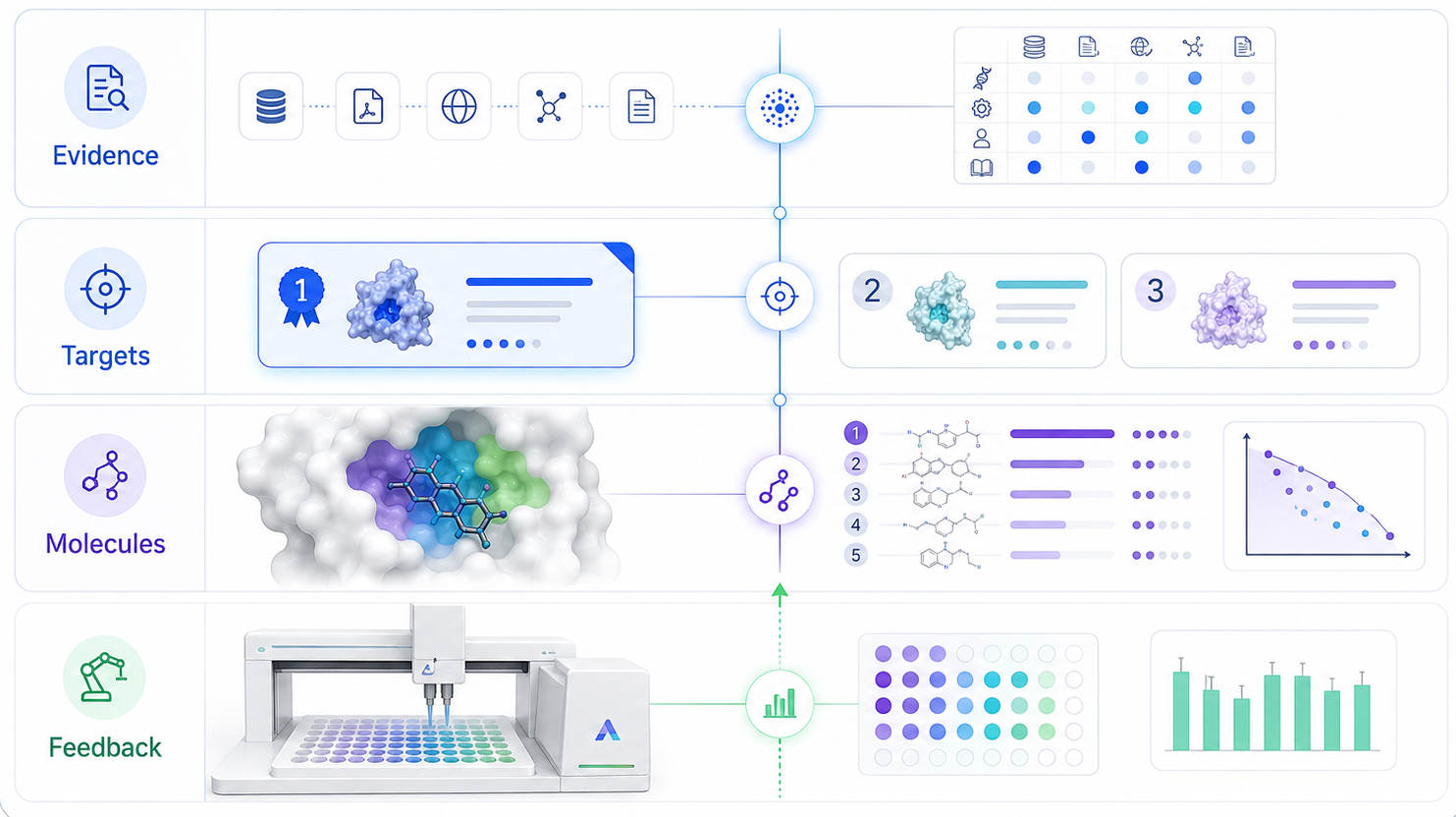
Evidence and targets
ADAPT structures claims, provenance, contradictions and uncertainty, then relates them to the hypotheses and experiments that matter.
claims · sources · confidence
context · plausibility · relevance
uncertainty · decisive experiments
advance · stop · revisit
Multi-objective molecular decisions
The programme must balance biological activity with properties, safety, synthesis, costs, novelty and evidence quality.
Programme-specific models
Evidence, similarity, structural, optimisation and ADMET capabilities are orchestrated by ADAPT around the programme—not exposed as isolated point tools.
Design–make–test–learn
ADAPT interfaces with the SYNTHEX platform. The distinctive feature is not synthesis automation alone, but the connected choice of what to produce and test.
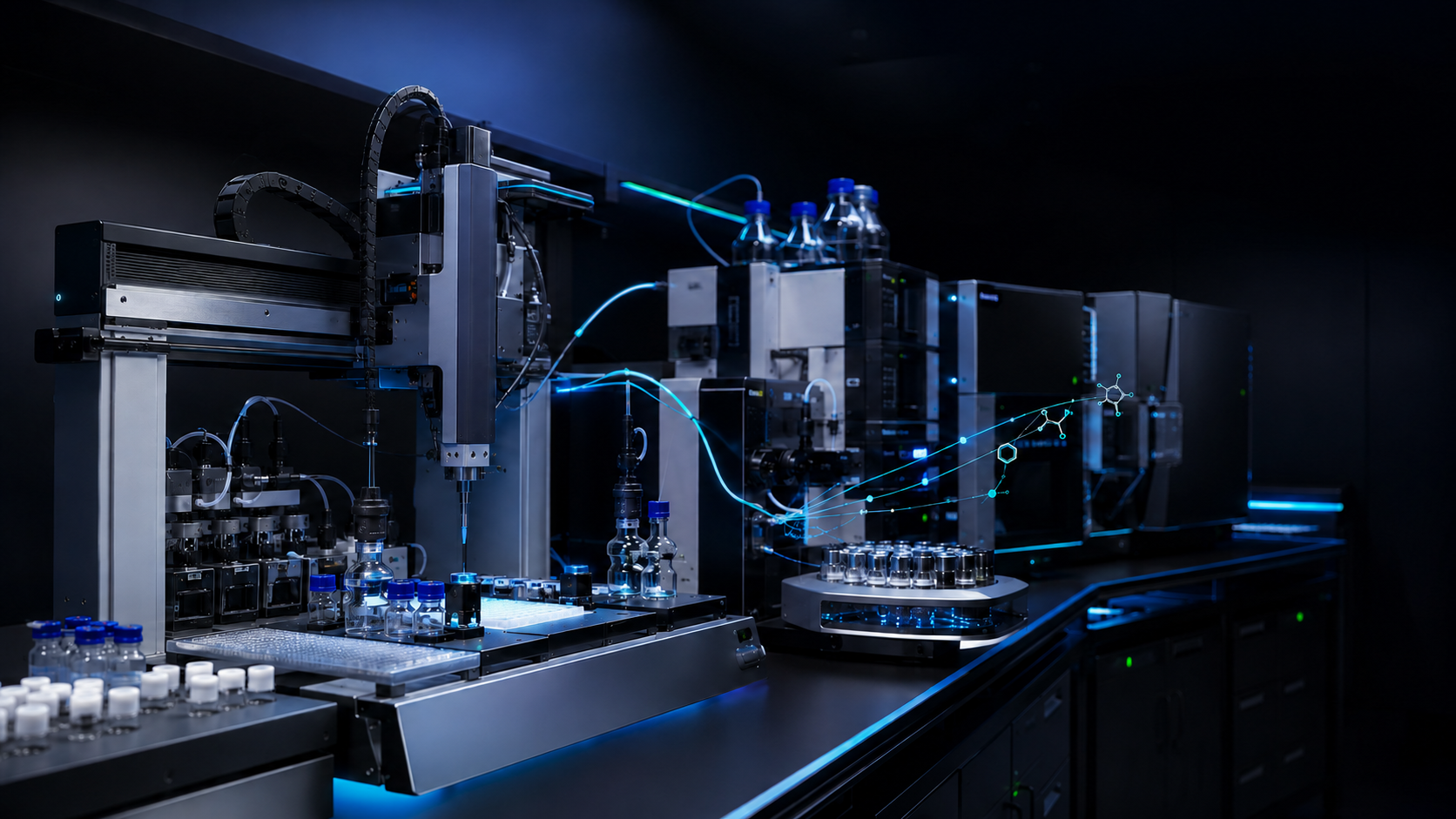
Robotic modules are configured for the chemistry, materials, transfers and analytical interfaces required by the programme.
Magnetic solid supports enable parallel handling, separation, washing and multi-step library synthesis.
ADAPT selects syntheses and assays for information value, then returns success and failure to the next cycle.
Illustrative pilot cadence
This is an illustrative fast-track cadence. Timing depends on data readiness, chemistry, assay availability and experimental scope.
Define the question, available data, success criteria and decision gates.
Programme charterBuild the evidence landscape, target rationale and uncertainty map.
Evidence packageEvaluate candidates and expose the important programme trade-offs.
Decision setDefine or execute synthesis, assays and the next learning cycle.
Go/no-go packageWhat remains after the engagement
The partner receives a decision package and a reusable programme memory that preserves the logic behind the decision.
Claims, sources, contradictions, confidence and knowledge gaps.
Context, assumptions, validation priorities and alternatives.
Rankings, trade-offs, liabilities, uncertainty and backup options.
Routes, experiments, decision gates and expected information value.
Go/no-go rationale, risks, milestones and recommended next action.
Structured programme memory for subsequent discovery cycles.
Ways to work together
Engagements can evolve from one tightly scoped decision to an integrated platform relationship or co-development programme.
Measurable milestones and reusable outputs.
Fast proof of valueProgramme-specific modules, scientific memory and SaaS/API access.
Operational integrationShared scientific milestones, IP and commercial upside.
Strategic partnership