Methodology
From graph edge to readable, verifiable evidence
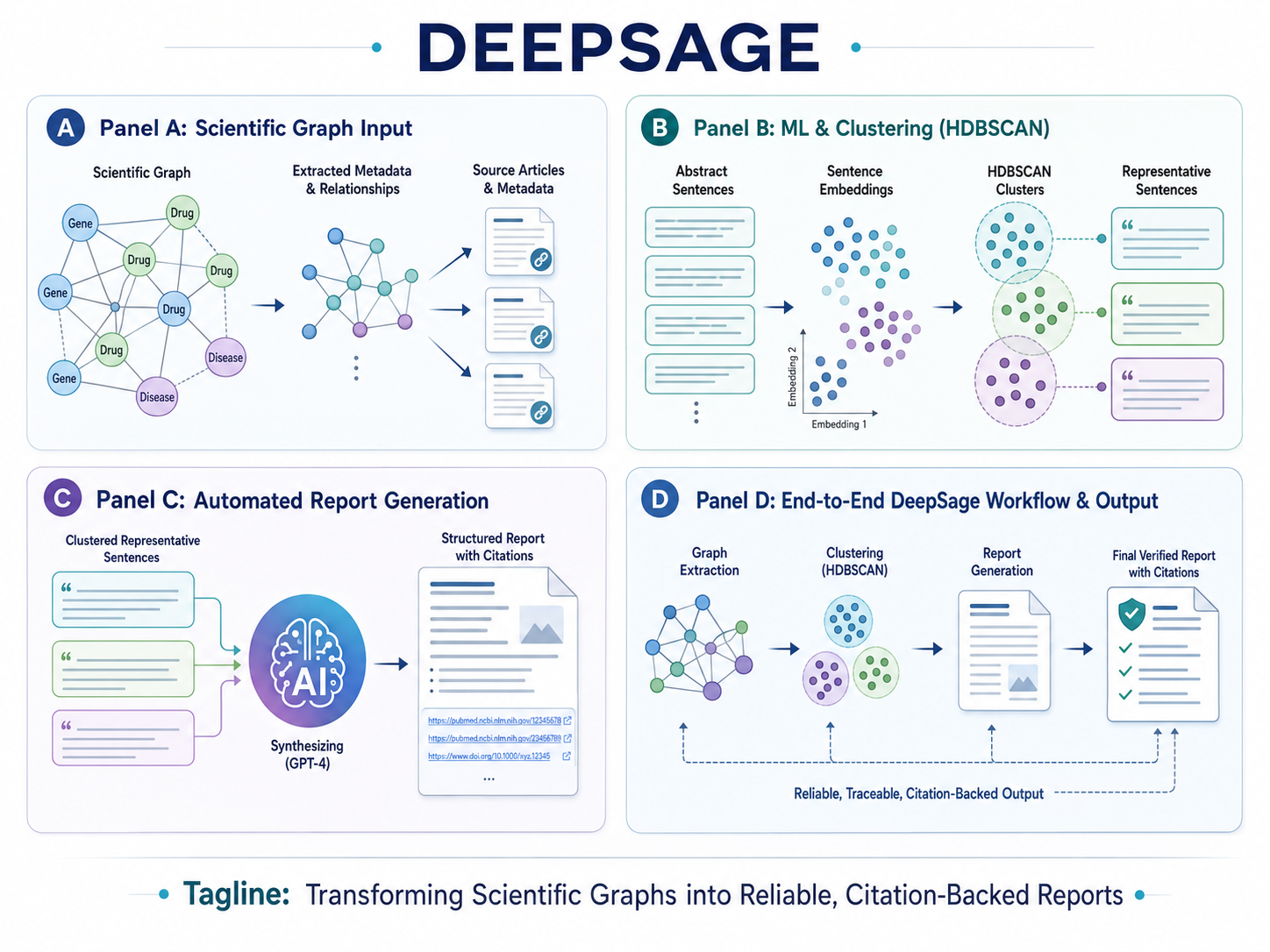
The public explanation shows where the “magic” happens. For each graph relationship, PubMed-linked evidence is retrieved, split into meaningful sentence units, encoded with scientific-language embeddings, clustered into coherent semantic groups, and assembled into readable reports with explicit citation trails.
Define the relationship
Genes, drugs, diseases and molecules are represented as graph entities linked by evidence-bearing edges.
Retrieve and encode
Abstracts linked to the graph relation provide the textual substrate. Their sentences are embedded in a scientific semantic space.
Cluster the literature
Dense regions reveal dominant semantic groups; sparse but coherent clusters preserve emerging or minority viewpoints.
graph relation → linked articles → sentence embeddings → semantic clusters → majority report / minority report → traceable citationsThe goal is not to replace provenance with polished prose. It is to preserve the structure of the scientific evidence while turning it into decision-ready output.
Vizit example
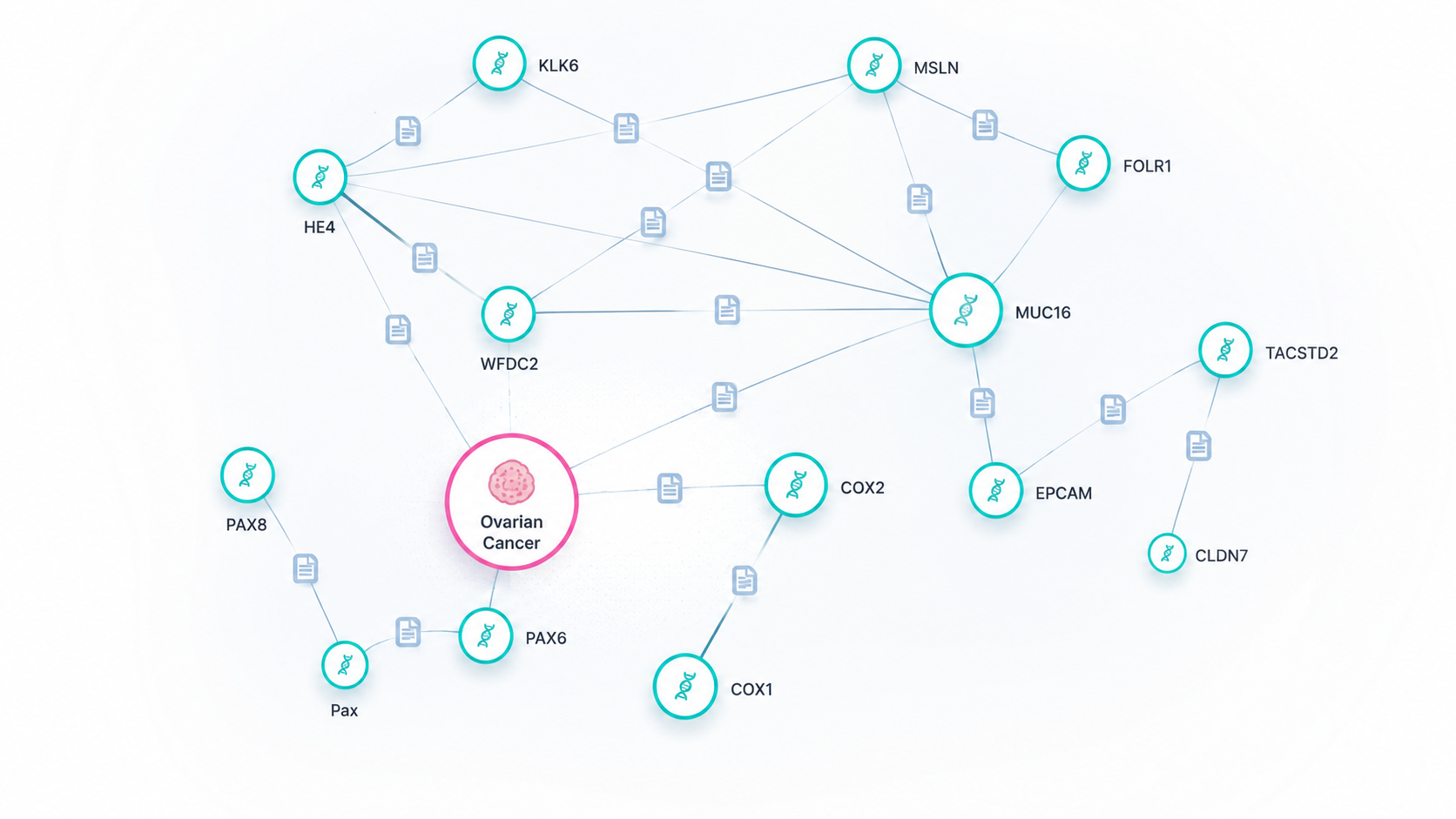
Vizit supplies the graph. DeepSage interrogates the evidence.
Vizit is the interactive biomedical graph layer used to inspect entities and source-backed relationships. DeepSage can then turn those evidence-bearing relationships into structured, citation-backed reports rather than generic summaries.
Why it matters
A literature consensus can hide the signal at the edge.
DeepSage is designed to preserve scientific disagreement. High-weight clusters reflect the dominant literature; low-weight clusters remain visible as distinct evidence, supporting hypothesis generation, critical review and more robust scientific discussion.
What does the dominant evidence say?
DeepSage can generate the prevailing interpretation associated with a graph edge using the densest semantic evidence clusters.
Consensus without losing provenanceWhat would a conventional summary suppress?
Lower-density but meaningful clusters remain available as alternative or emerging viewpoints rather than being averaged away.
Innovation often lives hereUse evidence inside a programme
Once structured, the evidence can remain connected to targets, molecules, constraints and experimental decisions inside ADAPT.
Open the ADAPT technical page →Try the evidence layer
Bring a scientific question, not just a keyword.
A demo can start from a target, disease, mechanism, drug or review question and show how DeepSage preserves provenance and minority evidence inside the broader ADAPT workflow.