2026
DeepSage online
DeepSage goes online as SoftMining’s evidence-intelligence layer, converting graph-linked scientific literature into structured, citation-backed reports while preserving dominant and minority evidence as distinct signals.
Company / selected milestones
SoftMining has evolved through scientific tools, international programmes, collaborative projects and physical experimentation. This is a selected company timeline—not a complete news archive.
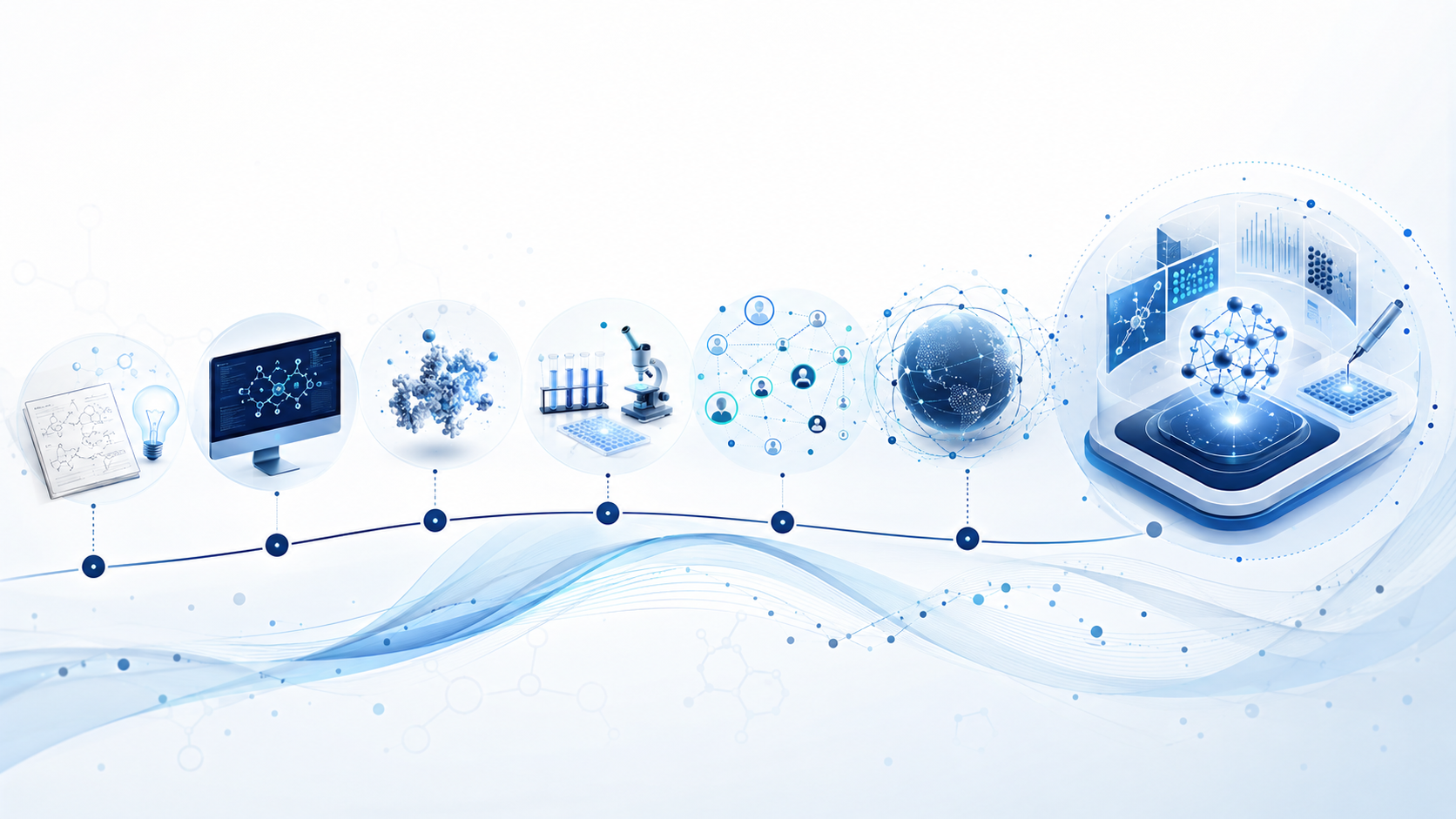
2026 → 2019 / Reverse chronology
The historical site contains a much longer sequence of product announcements, conferences and project updates. Here we keep only milestones that help explain how the present company and platform emerged.
DeepSage goes online as SoftMining’s evidence-intelligence layer, converting graph-linked scientific literature into structured, citation-backed reports while preserving dominant and minority evidence as distinct signals.
SoftMining and Biovista strengthen their collaboration around evidence-backed biomedical knowledge graphs and drug-repurposing workflows, combining SoftMining computational methods with Biovista’s Vizit environment and the experience developed through NEWROAD.
SoftMining joined the Repo4EU community focused on drug repurposing and network medicine.
ADAPT was announced online as SoftMining's integrated platform connecting AI-driven discovery with synthesis and testing workflows.
SoftMining took part in Singapore Week of Innovation and Technology, extending its international business-development activity.
SoftMining was included among 15 Italian startups to follow in the eHealth sector.
SoftMining GmbH was incorporated in Zurich, Switzerland.
SoftMining Pte. Ltd. was incorporated in Singapore.
SoftMining joined the EU-funded NEWROAD project on systematic drug repurposing in oncology.
The MIND project received Eurostars support for work focused on molecules for neurological diseases.
SoftMining's semantic-analysis work entered the IRCAI Global Top 100 list.
SoftMining participated in the EIT Health InnoStars Headstart programme and other early international startup initiatives, establishing an initial international footprint.
What changed
Individual computational methods, international collaborations and experimental capabilities progressively converged into ADAPT orchestration and the SYNTHEX physical loop.
Early work was centred on scientific methods, semantic analysis and computational components.
Collaborative projects and translational programmes helped turn isolated tools into structured workflows.
The result is a system where evidence, modelling, synthesis and validation remain connected.
Next phase
The timeline matters only because it explains the current platform and the next wave of programmes and collaborations.